HHyderabad Bus AtlasFleet field guide

FLEET FIELD GUIDE · MAY 2026

Know the bus
before it arrives.

From green City Ordinary workhorses to silent e-Metros and overnight Lahari sleepers: a practical guide to the buses used in and around Hyderabad.

Explore city buses ↓
218CITY ORDINARY
10,201total TGSRTC buses
6,669corporation-owned
3,532hired buses
969electric buses

Official statewide fleet at 31 May 2026. Hyderabad-only totals are not published in the same live summary.

THE CITY FLEET

Four families you’ll meet at a Hyderabad stop.

Service class tells you more than the paint alone: stopping pattern, comfort and propulsion can vary within a family.

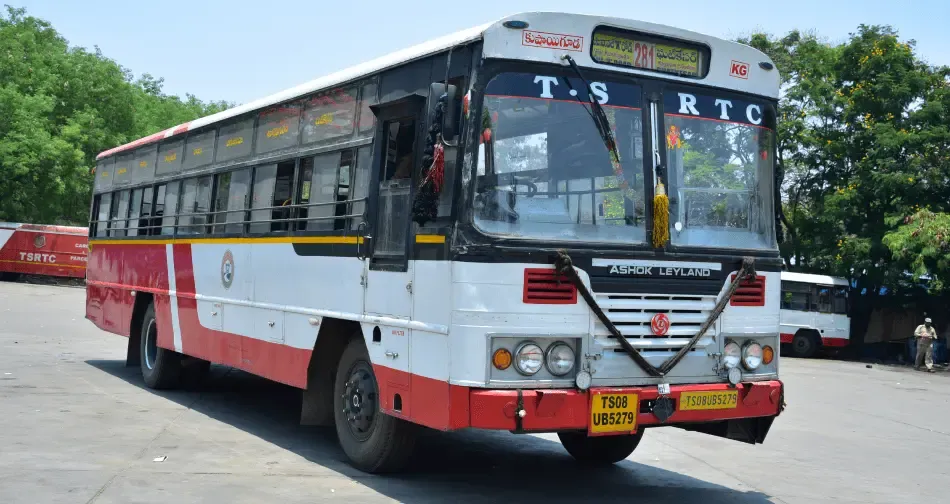
Red and white TSRTC City Ordinary bus driving through Hyderabad
01Diesel + electric

City Ordinary

The everyday workhorse

The broadest-stop, lowest-fare city service. Built for high turnover and short urban trips, with two passenger entrances on conventional buses.

Frequent stops · 2×2 seating · standing room
Manufacturers & route use
Who builds it

Standard RTC-built city bodies use 11-metre chassis from Ashok Leyland (VK2011), Tata (LPO 1618/57) and VECV/Eicher (6016), according to TGSRTC’s 2023 body specification.

Where it runs

Used on all-stop city and suburban work. The exact chassis sent on a route changes by depot, day and availability; GTFS does not carry vehicle assignments.

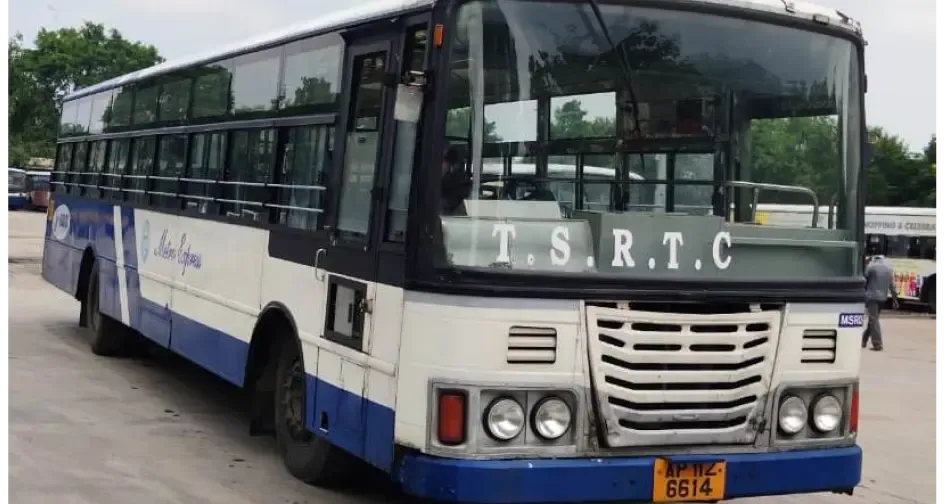
Blue and white TSRTC Metro Express bus in Hyderabad
02Diesel

Metro Express

Faster cross-city links

A limited-stop step up from City Ordinary for longer journeys through the twin cities. It shares the standard 11-metre city-bus platform.

Fewer stops · faster corridors · 2×2 seating
Manufacturers & route use
Who builds it

Built to the same TGSRTC 11-metre city-body specification as City Ordinary, using Ashok Leyland, Tata or VECV/Eicher chassis with a different service fit-out and livery.

Where it runs

Typically used on limited-stop trunk and longer cross-city routes. A route number can receive a different service class at different times.

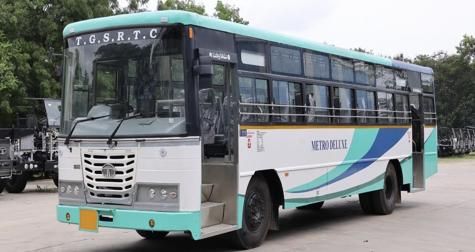
Green and white TSRTC Metro Deluxe bus under the Hyderabad Metro
03Diesel

Metro Deluxe

Longer city commutes

Introduced for long-distance city commuters with improved seats, wider windows and a more comfortable interior than the basic city classes.

Premium city service · wider windows
Manufacturers & route use
Who builds it

Common Hyderabad examples are RTC-bodied Ashok Leyland and Tata buses. TGSRTC publishes the service class, but not a live manufacturer-by-vehicle register for the city fleet.

Where it runs

Used on selected longer city corridors where the timetable offers a higher-comfort service. Metro Deluxe is a service tier, not a guarantee of one chassis model.

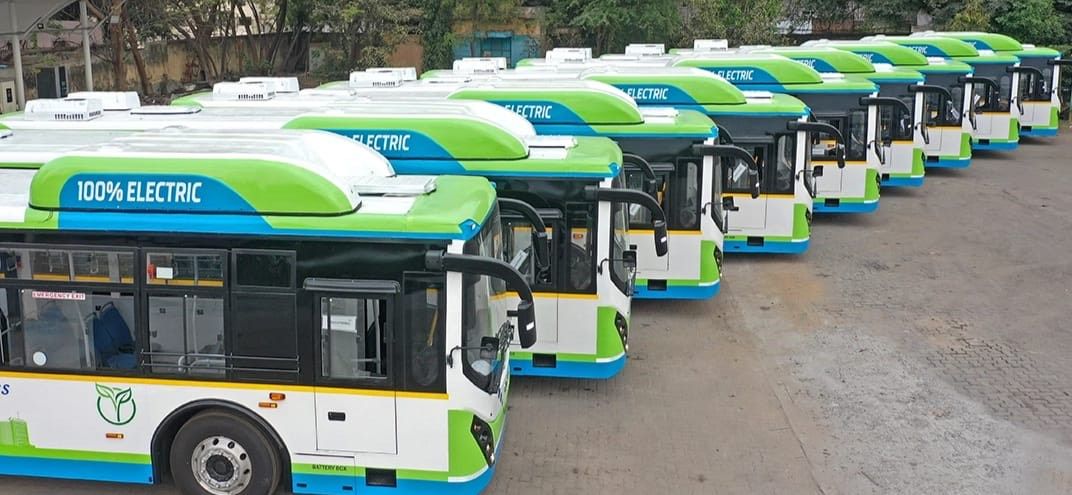
Bright green Olectra BYD electric TSRTC bus on a Hyderabad road
04Electric · AC / non-AC

e-Metro

The new electric city fleet

Zero-tailpipe-emission city buses in air-conditioned and non-air-conditioned forms. Low-floor access and quieter operation distinguish the modern electric fleet.

Low floor · wheelchair access · live information
Manufacturers & route use
Who builds it

The photographed generation is an Olectra Greentech bus using BYD electric-bus technology. TGSRTC also reports later hired and corporation electric batches under e-Metro and other e-service classes.

Where it runs

Electric buses are rostered from equipped depots onto selected city and airport-oriented duties. Charging, range and depot availability mean assignments can change.

BEYOND THE CITY GRID

Buses you’ll see at Hyderabad’s terminals.

These services belong to the wider Telangana network, but Hyderabad is a major origin, destination and interchange for them.

01

Pushpak / airport electric

Air-conditioned 12-metre electric coaches used on airport-oriented services, with kneeling and wheelchair mechanisms, CCTV and passenger information displays.

02

Express & e-Express

Limited-stop regional services that connect Hyderabad with towns across Telangana; electric Express buses now sit alongside the familiar diesel fleet.

03

Deluxe & e-Deluxe

A more comfortable regional tier above Express, used for medium and longer intercity journeys.

04

Super Luxury & e-Super Luxury

Reclining-seat intercity coaches for longer-distance work, now represented in both diesel and electric fleets.

05

Rajadhani

Air-conditioned intercity coaches used on selected premium routes from Hyderabad.

06

Garuda Plus & e-Garuda

TGSRTC’s premium air-conditioned coach family. Garuda Plus includes multi-axle Volvo, Scania and Mercedes-Benz coaches; e-Garuda is the electric counterpart.

07

Lahari

Sleeper and sleeper-cum-seater coaches for overnight travel, offered in AC and non-AC forms.

08

Palle Velugu

The rural connective fleet. These buses are commonly seen at Hyderabad’s regional terminals before continuing to villages and smaller towns.
WHAT “BUS TYPE” MEANS

Brand, body and ownership are different layers.

01

Service class

City Ordinary, Metro Express or Garuda describes how TGSRTC positions and operates the service.

02

Propulsion

A service family may include diesel and electric buses. The “e-” prefix identifies electric variants in official totals.

03

Chassis & coach

Standard city bodies may be built on Ashok Leyland, Tata or VECV/Eicher chassis. Premium coaches can include Volvo, Scania and Mercedes-Benz makes.

04

Ownership

A bus can be RTC-owned or hired. Both may wear the system’s livery and operate as a TGSRTC service.

SCOPE & SOURCES

A guide to published service types—not a vehicle register.

TGSRTC publishes a live statewide fleet summary and coach specifications, but not a continuously updated Hyderabad-only vehicle-by-vehicle roster. Counts on this page are therefore statewide; city sections identify the service families used locally.

Last reviewed 26 July 2026 · Fleet figures dated 31 May 2026. Coach photographs: TGSRTC official Coach Types page; images cropped for presentation.